PROJECT COMPLETED: December 2019
Harlem Link Data Suite: Social-Emotional Learning | Data Analysis & Dashboard by David White
THE STORY OF THIS PROJECT
Stakeholder’s Problem: “We need a way to understand the results of our survey and communicate the insights we’ve gained.”
Harlem Link Charter School is a tuition-free, independent charter school located in New York City. It serves 450 children in Pre-Kindergarten through Grade 5. Harlem Link is committed to equitable programming, inclusiveness and serving all children in its community (Harlem and Washington Heights).
At Harlem Link, teachers fill out a detailed survey twice a year that assesses each of their students on several measures of their social and emotional learning. The surveys produce a large volume of data that needs to be collected, crunched and reported on within a short window of time. In order to meet that challenge, I took the following steps:
Step 1 - Discovery
To begin the process of creating the data report, I met with the school’s teachers and administrators. I listened to the concerns they had and the challenges they were facing. I began to form an idea of what information needed to be included in the final report and what raw data needed to be gathered.
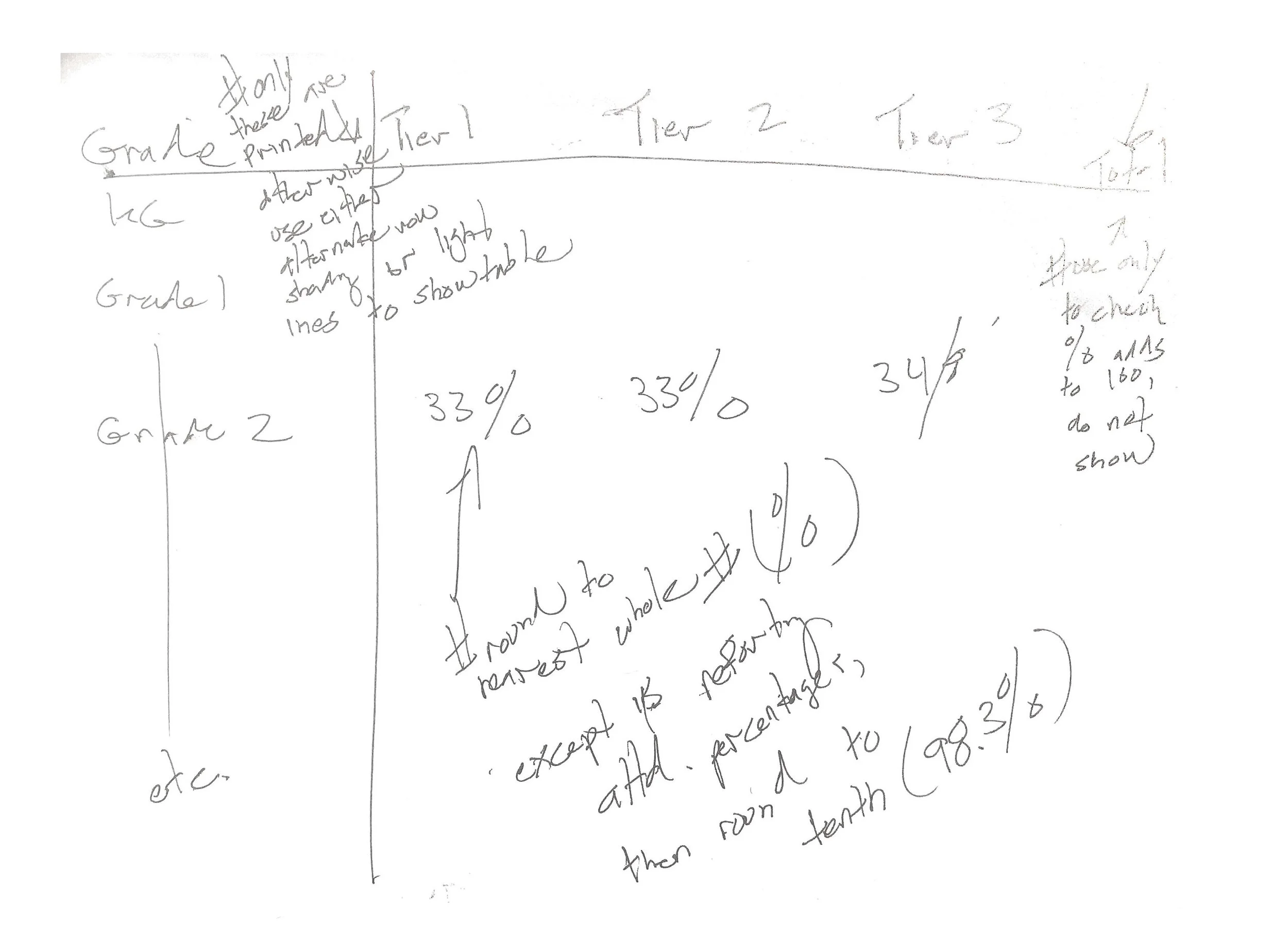
Step 2 - Sketch
Next, I made a rough sketch of what the reports would look like and what information would go where on the screen.
Step 3 - Prep Data
To complete this step, I took the following actions:
I identified exactly what data needed to be displayed.
I identified sources for each of those data points.
I exported that data from school information systems (or requested a data export from an outside source).
I cleaned up and organized the data exports.
I compiled the data into Google Sheets.
Step 4 - Build
Next, I took the Google Sheets datasources I’d just compiled and I connected them to Google Data Studio. I began to build out the report inside of Data Studio.
Step 5 - Publish
I published the finished report to the cloud using Google Data Studio and I shared them with all stakeholders. Since the document was based online, all members of the team could review the data prior to the data meeting and arrive prepared to contribute to the group discussion.